
Your logo is part of your brand, but it is not the whole brand. For a financial advice firm, branding is the complete impression somebody forms whenever they encounter the business.
That impression may begin with your website, an adviser profile, a LinkedIn post or a recommendation from an existing client. It is shaped by the way the firm looks, the language it uses, the expertise it makes visible and whether each touchpoint feels as though it belongs to the same organisation.
Strong financial services branding brings those elements together. It makes the firm easier to recognise, gives prospective clients a clearer understanding of who it is for and helps the quality of the marketing reflect the quality of the advice behind it.
A good brand helps prospective clients understand who you are before an adviser ever speaks to them.
- Understand what your brand includes
- Start with audience and positioning
- Build a distinctive visual identity
- Make the brand real across the journey
- Give your team a brand they can use
- Know when the brand needs to change
- Use content to build recognition
- Measure what the brand improves
- Build a brand the firm can grow into
Understand what your brand includes
When firms discuss branding, the conversation often begins with logos, colours and fonts. Those elements matter because they help people recognise the business, but they are only one layer of a wider system.
A brand also includes how the firm positions itself, the tone it uses and the experience people receive as they move from the first piece of marketing into a real relationship. If those elements contradict one another, a polished logo will not make the business feel coherent.
How do you look?
Your logo, colours, typography, photography and graphic style should make the firm recognisable across different channels.
What do you stand for?
Your messaging should explain who the firm is designed to help and why its approach may be particularly valuable.
How do you sound?
The language used across your website, content and communications should reflect the relationship clients can expect.
When those elements work together, the brand becomes more than a logo placed at the top of a website. It provides a framework for how the whole business presents itself and a dependable starting point for everything the firm creates next.
Your prospective clients experience the brand before they experience the advice.
Start with audience and positioning
A strong brand should not be designed entirely around what the directors personally like. It needs to work for the people the firm wants to attract while still feeling authentic to the organisation behind it.
A clearer target market gives the branding process direction. A firm working mainly with business owners may need to communicate different expertise and experience from one focused on people approaching retirement, even when both provide broadly similar financial-planning services.
Demographic information can help, but the situation bringing somebody towards advice is often more useful. A company sale, retirement or inheritance can create different questions and expectations even among people with similar levels of wealth.
A brand becomes easier to shape when you know whose attention it is designed to earn.
Once the audience is clearer, the business needs to decide what it wants those people to understand. A strong value proposition moves beyond familiar promises about personal service and long-term relationships by explaining what those ideas mean inside this particular firm.
Define the audience
Be clear about the clients, situations and relationships the brand most needs to support.
Identify the strengths
Look at the expertise, experience and way of working that create genuine value for those clients.
Translate the value
Explain what those strengths help clients understand, organise or decide more confidently.
Support the promise
Use real advisers, client evidence and useful content to make the position credible.
Positioning gives design a problem to solve. Without it, the project can become a debate about whether the firm should feel more modern, premium or approachable, with no shared view of what those words need to achieve.
Strong financial services copywriting then turns the strategy into language clients can understand across homepage messages, company descriptions, adviser profiles and service content.
The firm should be easy to explain
Give advisers and teams a clear central idea they can express naturally without reading from a brand document.
Build a distinctive visual identity
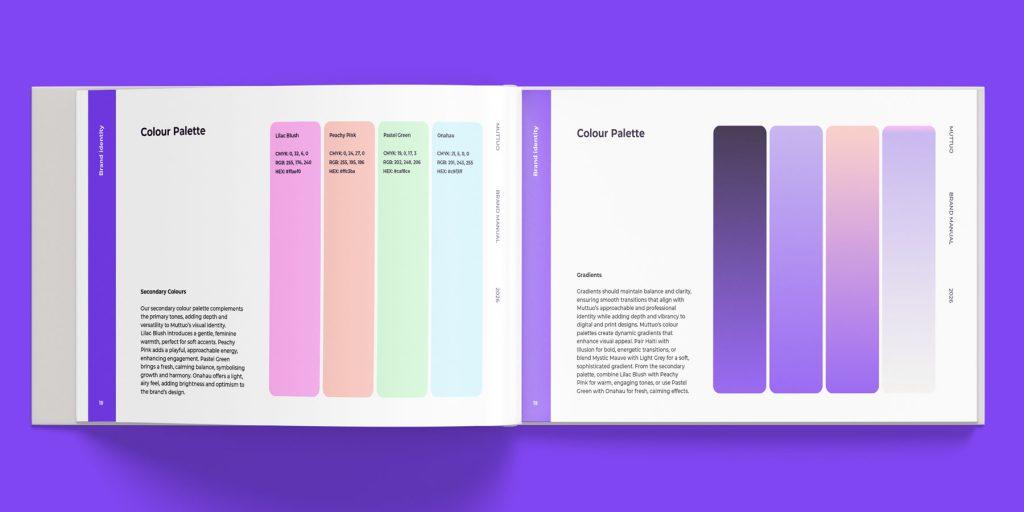
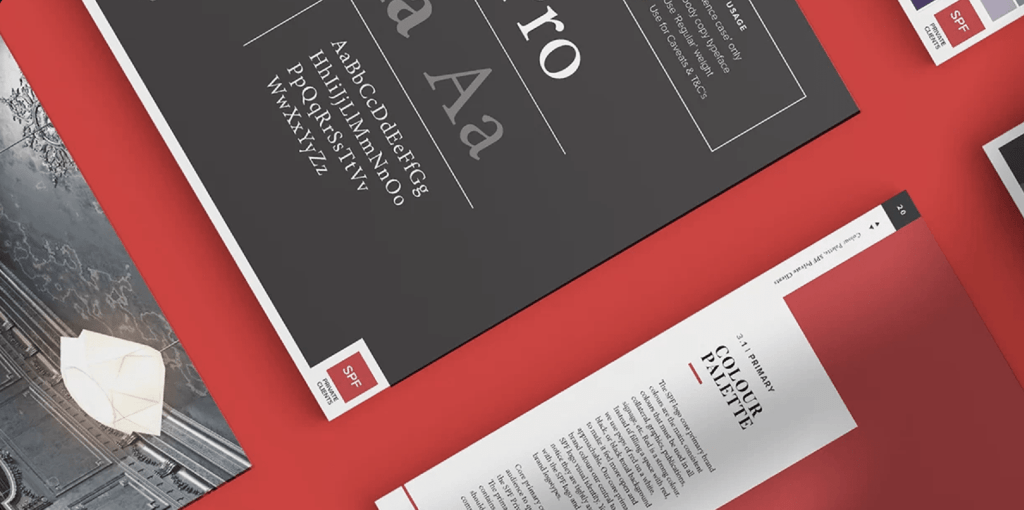
The visual identity gives the position a recognisable form. The logo matters, but it sits within a broader system of typography, colour, photography, graphic devices and layout.
That system should make the firm distinctive enough to remember while remaining credible for the audience and services involved. It should also work across the formats the business actually uses, rather than looking impressive only in a launch presentation.
Create visual memory
Use distinctive elements consistently enough that repeated communications become easier to associate with the firm.
Reflect the audience
Make sure the identity feels appropriate for the people and relationships the business wants to attract.
Work across real formats
Give the system enough range to support websites, reports, presentations, social posts and client communications.
Professional does not need to mean predictable. Financial firms understandably want to communicate trust and stability, but that does not require every business to use the same conservative colours, city imagery and visual references to growth or security.
Good financial services design uses identity to improve communication. Clear hierarchy, thoughtful spacing and suitable imagery can make complex information easier to use while still giving the firm a distinctive character.
Create a visual language
A report, website and social post can use different layouts while remaining recognisably part of the same brand.
Make the brand real across the journey
A brand becomes credible through use. Prospective clients should encounter the same central position and level of quality as they move from an article or adviser profile into the website and eventually into a real conversation.
The website is often the most substantial expression of the brand before contact. Its structure, copy, imagery and navigation should make the firm easier to understand, not simply apply the logo and colours to a list of services.
Adviser profiles need a clear role too. Financial advice is delivered through people, so the individual should feel visible and approachable while remaining connected to the wider firm through consistent photography, language and presentation.
The company creates confidence in the organisation. Adviser profiles create confidence in the people clients may actually meet.
The experience should remain coherent after somebody makes contact. Proposals, presentations, onboarding emails and other client-facing materials all influence whether the relationship feels as considered as the marketing promised.
The brand continues after the enquiry
A polished website followed by confusing documents creates a noticeable drop in quality at exactly the wrong moment.
Give your team a brand they can use
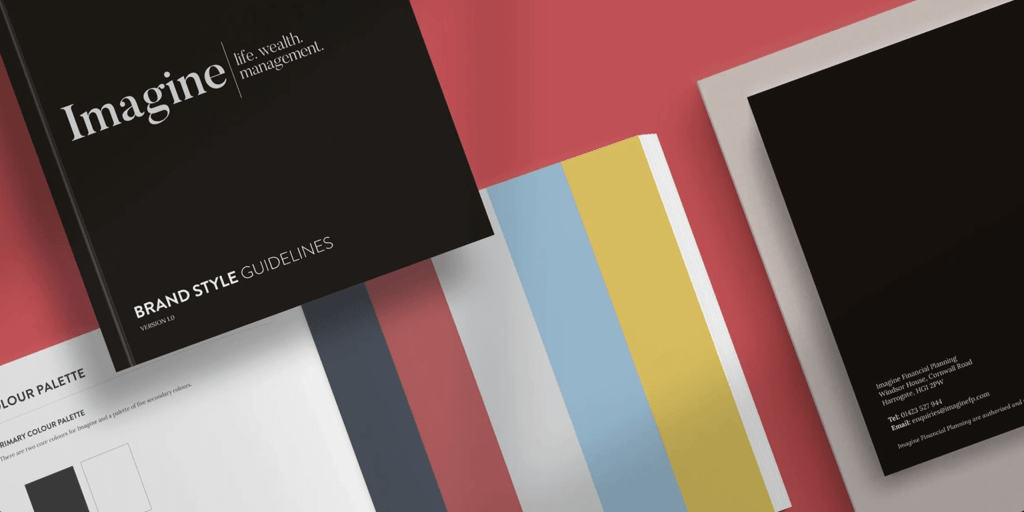
One of the clearest tests of a brand is whether it still works after the original design project has finished. Advisers need presentations, profile graphics and documents. Marketing teams need social templates, reports and campaign materials. New people join and need to represent the firm consistently.
If every new requirement forces the team to interpret the identity from the beginning, inconsistency will return quickly. A useful system gives people practical tools for the situations they actually encounter.
Create practical guidelines
Explain how the identity and voice should work across the formats teams regularly produce.
Build useful templates
Prepare adaptable starting points for presentations, reports, social content and recurring documents.
Organise the asset library
Give teams one reliable place to find current logos, imagery and approved materials.
Give the system ownership
Make somebody responsible for maintaining the toolkit and removing outdated versions.
The required toolkit will vary from firm to firm. A business publishing regular research may need report and chart components, while one building adviser visibility may need profile packages and several social formats.
A focused set of marketing materials should reflect the real work of the business rather than trying to provide a template for every hypothetical situation.
The easiest way to protect consistency is to make the correct approach easier to use than an improvised one.
Know when the brand needs to change
Brands rarely stop working overnight. More often, the business changes while the identity, messaging and materials remain largely the same.
The firm grows, new advisers join and the target client changes. Services become more sophisticated, while expectations around websites and digital communication move forward. Eventually, the external brand no longer provides an accurate picture of the organisation behind it.
- The website feels older than the business you have become.
- The messaging could describe almost any adviser rather than your particular firm.
- Your target clients have changed but the brand still speaks to an earlier audience.
- Advisers create their own materials because the existing system does not support what they need.
- Different channels feel disconnected in their design, tone and description of the business.
Not every weakness requires a complete replacement. Some firms need better consistency, others need a visual refresh and some need a broader rebrand because the audience, proposition or direction of the business has changed more substantially.
The system has fragmented
The central identity still works, but inconsistent assets and profiles need to be brought back together.
The foundations remain useful
Recognition and positioning still have value, but the visual execution needs strengthening.
The business story has changed
The firm now serves different audiences or needs a more substantial change in market perception.
Keep what still works. Established names, colours or symbols may hold genuine recognition, and evolution can be more valuable than reinvention when it preserves useful equity while solving the real problem.
A successful rebrand should make the business feel more like itself, not less.
Use content to build recognition
A strong identity becomes more valuable when people encounter it regularly. This is where branding and content marketing begin reinforcing one another.
Articles demonstrate expertise, adviser posts create familiarity and reports or research can build deeper authority. The brand makes those individual communications easier to recognise, while the content gives the identity something meaningful to become known for.
Demonstrate expertise
Explore the questions and decisions relevant to the people the firm most wants to attract.
Build familiarity
Give advisers and the company regular opportunities to make useful thinking visible.
Create deeper authority
Use substantial branded assets to provide original insight and extend the firm’s reputation.
Consistency should not mean forcing every idea into one design. Different formats can be created for adviser commentary, statistics, client stories and educational content while keeping the visual language connected.
Recognition grows through useful repetition
The logo alone will not build familiarity. Clients and prospects need repeated opportunities to encounter valuable communication that clearly belongs to your firm.
Measure what the brand improves
Branding can be difficult to reduce to one number because it influences several parts of the business. There may not be a single metric that proves the value of a stronger identity, but the project should still create visible improvements.
Return to the original problem. If inconsistency was holding the firm back, has marketing become easier to produce coherently? If the proposition was unclear, do clients and advisers now describe the business more consistently? If the goal was attracting a different audience, are more suitable conversations beginning to appear?
Is the firm easier to explain?
Look at whether clients, advisers and professional contacts describe its value more consistently.
Does the marketing feel connected?
Review whether websites, profiles, presentations and content now feel part of one business.
Is the audience improving?
Look for stronger engagement and better-fit enquiries from the people the brand was designed to attract.
Qualitative evidence matters too. Advisers may feel more confident sending people to the website, prospective clients may say the firm felt more relevant and employees may find it easier to explain how the business differs.
Better branding can also create operational value. A practical design system reduces repeated decisions, makes new adviser materials easier to produce and gives external partners a clearer foundation to work from.
A successful brand should make the business easier to recognise, easier to explain and easier to market.
Build a brand the firm can grow into
Good financial services branding should solve today’s problems without creating tomorrow’s limitations. The firm may add advisers, enter new markets, develop specialist propositions or become more active across content and digital channels.
The brand needs a clear central position and enough flexibility to support that growth. New people should be able to understand it, teams should be able to use it and future marketing should have a dependable foundation to build from.
At Goldmine Media, our financial services branding work connects audience strategy, positioning, copy, visual identity and practical assets. Our role is not simply to give the business a new look. It is to create a clearer and more usable brand system that supports the wider marketing programme.
You can see different examples of this approach through our work with RZ Financial Planning, Kingsbury & Partners and SPF Private Clients.
A strong brand makes the value already inside the firm easier for the right clients to recognise and remember.
Ready to collaborate?
If your firm needs clearer positioning, a stronger identity or a practical brand system that can support its wider marketing, we’d love to hear what you’re working on.

